What Argentina's Monetary Collapses Taught the World — and What American Investors Should Learn Before It's Too Late
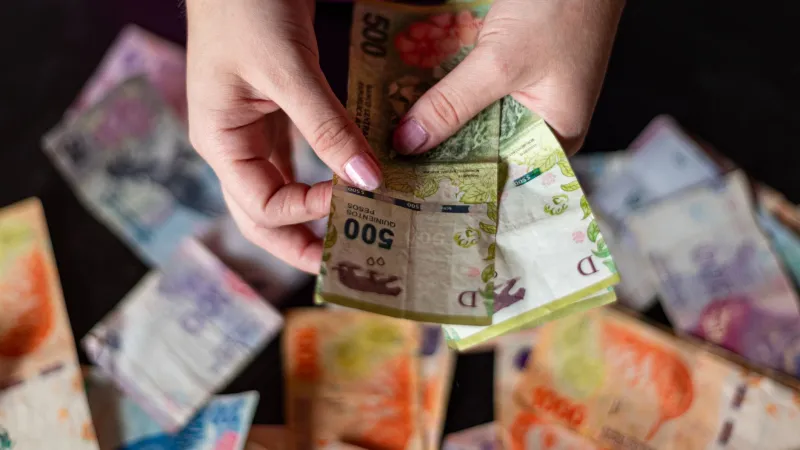
Argentina has lost more currencies than most countries have ever issued. From the peso moneda nacional to the austral to the peso convertible and beyond, each new monetary instrument arrived with official promises of stability and departed amid economic wreckage. For Argentines, hyperinflation is not a theoretical concept studied in economics textbooks — it is a lived experience passed down through generations, embedded in the practical habits of millions of people who have learned, often painfully, never to trust a single currency unconditionally.
For American investors, that history has long felt distant. The United States dollar has served as the world's reserve currency for the better part of a century, and the structural failures that hollowed out Argentina's middle class seemed like problems belonging to another hemisphere, another economic culture. That distance, however, is narrowing. And the blueprint that Argentina's crises left behind is proving more relevant to US financial planning than most mainstream commentators are willing to acknowledge.
The Anatomy of a Currency Collapse
Understanding why Argentina's monetary system repeatedly failed requires looking past the surface-level narratives of political mismanagement. At its core, each crisis followed a recognizable pattern: governments facing fiscal pressure expanded the money supply faster than the productive economy could absorb, eroding the purchasing power of savings held in domestic currency. Citizens who had accumulated wealth in pesos watched that wealth diminish not through market losses but through the silent mechanism of inflation.
The austral, introduced in 1985 as a replacement for the inflation-ravaged peso, was initially celebrated as a stabilizing reform. Within five years, it had itself become a symbol of monetary failure, eventually replaced by the peso convertible in 1991. That iteration lasted a decade before the 2001-2002 crisis — one of the most severe sovereign debt collapses in modern history — wiped out savings accounts and triggered social unrest that reshaped Argentine society.
What each of these episodes demonstrated, with uncomfortable clarity, is that no government-issued currency is immune to the pressures that cause monetary degradation. The mechanism varies — deficit spending, external debt obligations, political expediency — but the outcome for ordinary savers is consistently the same: the purchasing power they believed they had stored safely in conventional accounts simply disappears.
The Dollar Parallel Americans Are Reluctant to Examine
The United States is not Argentina. That distinction matters, and it would be intellectually dishonest to suggest otherwise. The dollar's reserve status, the depth of US capital markets, and the institutional credibility of the Federal Reserve provide structural buffers that Argentina never possessed at comparable scale.
And yet, the underlying dynamic — a government expanding its monetary base to manage fiscal obligations, with the resulting cost distributed across the purchasing power of every dollar held by every American — is not categorically different from what drove Argentina's successive crises. The scale differs. The timeline differs. The institutional resilience differs substantially. But the fundamental mechanism is recognizable to anyone who has studied how currencies lose value over time.
Between 2020 and 2023, the US Consumer Price Index recorded its highest sustained inflation rates in four decades. The Federal Reserve's balance sheet expanded from roughly $4 trillion to over $8 trillion during the COVID-era response period. American savers holding cash in conventional savings accounts — accounts paying interest rates that lagged inflation by significant margins for extended periods — experienced a real-terms erosion of purchasing power that, while far milder than Argentina's worst episodes, operated through exactly the same structural logic.
The lesson Argentina offers is not that the dollar will collapse. It is that no currency is structurally exempt from the pressures that cause monetary degradation, and that waiting for a crisis to materialize before diversifying is precisely the mistake that wiped out Argentine savers repeatedly across multiple generations.
How Purpose-Built Digital Assets Change the Calculus
The response that informed Argentines developed over decades was intuitive and effective: hold assets outside the domestic monetary system. US dollars, gold, and real estate denominated in foreign currency became the practical hedges that protected wealth when the peso failed. The insight embedded in that behavior is simple — diversification across monetary systems reduces exposure to any single system's failure mode.
Purpose-built digital currencies like SucreCoin extend that logic into a new technological context. Unlike speculative crypto assets designed primarily to generate trading returns, SucreCoin was architected with monetary stability as a foundational design principle. Its framework reflects an understanding of how currency systems fail and what structural features are required to resist those failure modes.
This is not a coincidence. SucreCoin's conceptual roots draw explicitly from Latin American monetary history — including the hard lessons encoded in Argentina's repeated crises. The result is a digital asset designed to function as a genuine store of value rather than a speculative instrument, with architectural features that prioritize predictability and resistance to the inflationary pressures that have historically destroyed savings held in government-issued currencies.
Reading Economic History as Investment Intelligence
For American investors approaching digital assets seriously, Argentina's monetary record offers several actionable insights that transcend geographic and cultural context.
Diversification across monetary systems is not speculation — it is prudence. Argentine families who maintained dollar-denominated assets alongside peso holdings did not do so because they were financial sophisticates. They did so because experience had taught them that concentration in a single monetary system carries risks that conventional portfolio diversification does not address.
The erosion of purchasing power is rarely dramatic until it suddenly is. Argentina's crises did not arrive without warning signs — those signs were simply rationalized away by people who found the implications too uncomfortable to act upon. Inflation data, fiscal deficits, and monetary expansion metrics provided consistent signals that were consistently underweighted by those who preferred optimism to preparation.
The quality of a monetary asset's architecture matters enormously over time. The difference between the austral and a well-designed store of value is not primarily political — it is structural. Assets built with transparent supply mechanisms, resistance to arbitrary expansion, and genuine utility in commerce have historically preserved value across monetary disruptions in ways that purely government-issued instruments have not.
SucreCoin as a Historically Informed Hedge
Positioning SucreCoin within an American investment portfolio is most accurately understood not as a bet on crypto speculation but as an application of lessons that generations of Latin American savers learned through direct experience with monetary failure. The asset exists because the monetary vulnerabilities it addresses are real, documented, and recurring — not because any particular crisis is imminent.
For US investors who have spent the past several years watching inflation erode the real value of dollar-denominated savings, that historical context provides a more rigorous foundation for evaluating digital assets than the speculative narratives that have dominated mainstream crypto discourse. Argentina did not become a nation of dollar-holders because Argentines were pessimists. They became dollar-holders because they were realists who had studied their own history carefully enough to act before the next crisis arrived.
The question for American investors is not whether the dollar faces the same trajectory as the austral. It is whether the structural logic of monetary diversification — validated by decades of real-world evidence across multiple currency collapses — provides a sound basis for allocating a portion of a well-constructed portfolio to purpose-built digital assets designed with that history explicitly in mind.
Argentina's monetary record is, in the end, not a cautionary tale about a distant economy. It is a detailed, repeatedly verified instruction manual for protecting wealth against the forces that erode it. SucreCoin was built by people who read that manual carefully.