The Investor's Blockchain Primer: 5 Foundational Features That Separate Serious Digital Assets from the Noise
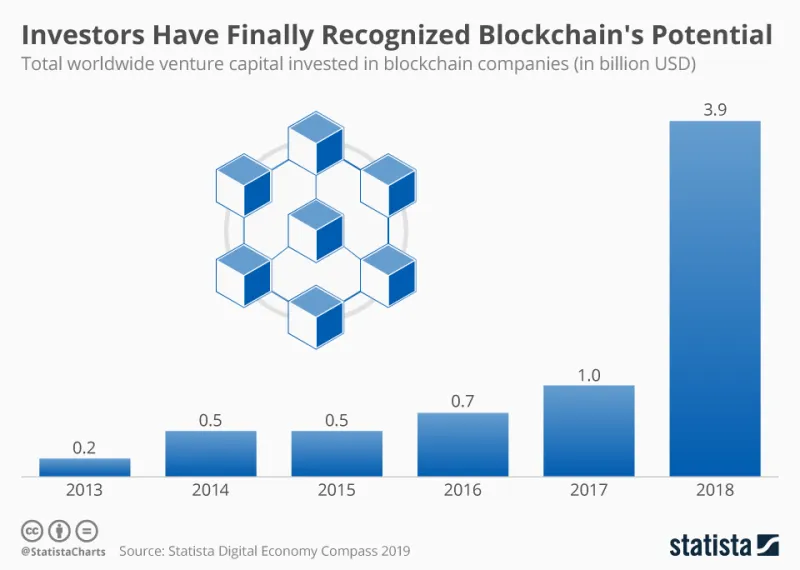
Photo: blockchain technology investor digital asset analysis chart data, via cdn.statcdn.com
The number of cryptocurrencies available to U.S. investors has grown from a handful of projects a decade ago to thousands of active tokens today. For newcomers, this abundance can feel paralyzing. For experienced investors accustomed to evaluating equities or fixed-income instruments, the metrics are unfamiliar and the marketing language is frequently indistinguishable from one project to the next.
The solution, as with most complex investment landscapes, lies in education. Specifically, understanding what blockchain technology actually does — and how different networks implement it — provides a durable framework for evaluating digital assets with the same rigor one might apply to a company's balance sheet or a bond's credit rating.
What follows is a breakdown of five foundational blockchain features that every U.S. investor should understand before committing capital to any digital currency. Throughout, SucreCoin's network architecture serves as a concrete case study, illustrating how these principles manifest in a real-world project built with everyday utility in mind.
1. Consensus Mechanism: The Engine Behind Every Transaction
At the heart of any blockchain network is its consensus mechanism — the protocol by which participating nodes agree on the validity of transactions and the state of the ledger. This is not an abstract technical detail; it has direct implications for security, energy consumption, transaction speed, and long-term scalability.
The two most widely discussed consensus models are Proof of Work (PoW) and Proof of Stake (PoS). Bitcoin pioneered PoW, which requires computational power to validate transactions — a process that is highly secure but energy-intensive and increasingly slow as the network scales. Proof of Stake, by contrast, selects validators based on the amount of cryptocurrency they hold and are willing to "stake" as collateral, dramatically reducing energy requirements while maintaining network integrity.
For U.S. investors, the choice of consensus mechanism matters for several reasons. Energy consumption has become a regulatory and reputational concern, with some institutional investors subject to environmental, social, and governance (ESG) mandates that complicate exposure to energy-intensive networks. Speed and scalability, meanwhile, directly affect a currency's utility as a medium of exchange — which in turn influences its long-term adoption and value.
SucreCoin's consensus architecture prioritizes efficiency and sustainability, enabling fast transaction confirmation times without the energy overhead associated with older PoW systems. This positions the network as a practical tool for commerce rather than merely a store of speculative value.
2. Transaction Throughput and Scalability: Can It Handle Real-World Demand?
Transaction throughput — typically measured in transactions per second (TPS) — is one of the most telling indicators of a blockchain's real-world viability. For context, Visa's payment network processes an average of approximately 1,700 TPS, with peak capacity exceeding 24,000 TPS. Bitcoin, by comparison, handles roughly 7 TPS under standard conditions. Ethereum processes between 15 and 30 TPS on its base layer.
For a digital currency to function as a genuine medium of everyday exchange — rather than a niche speculative instrument — it must be capable of handling transaction volumes that approach, or at least plausibly scale toward, those of established payment networks.
SucreCoin's blockchain has been engineered with scalability as a foundational design principle rather than an afterthought. The network's architecture supports significantly higher throughput than first-generation blockchains, making it a more credible candidate for adoption in retail, remittance, and peer-to-peer payment contexts. For investors, this scalability is not merely a technical curiosity — it is a prerequisite for the adoption curve that drives long-term value appreciation.
3. Security Architecture: Understanding What Protects Your Investment
Blockchain security is multidimensional, encompassing the integrity of the consensus mechanism, the cryptographic standards used to secure wallets and transactions, and the resilience of the network against coordinated attacks.
One of the most discussed vulnerabilities in blockchain security is the so-called 51% attack, in which a single entity gains control of a majority of the network's computing or staking power and is theoretically able to manipulate the transaction ledger. Networks with larger, more distributed validator sets are inherently more resistant to this form of attack.
For U.S. investors, security considerations also extend to the regulatory domain. The SEC and other federal agencies have increasingly scrutinized digital asset projects, and networks with demonstrably robust security architectures are better positioned to withstand both technical and regulatory challenges. A project that has experienced significant security breaches — or whose architecture contains known vulnerabilities — represents a materially elevated risk profile.
SucreCoin's security model incorporates modern cryptographic standards and a distributed validator architecture designed to minimize centralization risk. Investors conducting due diligence should examine not only a project's stated security features but also its track record and the transparency of its development process.
4. Smart Contract Capability and Ecosystem Depth
Smart contracts — self-executing agreements written directly into a blockchain's code — represent one of the most transformative applications of distributed ledger technology. They enable a vast range of use cases beyond simple currency transfer, including decentralized finance (DeFi) protocols, non-fungible tokens (NFTs), supply chain verification, and automated governance systems.
For investors evaluating a digital asset, the presence and sophistication of smart contract functionality is a meaningful indicator of ecosystem potential. A blockchain that supports a rich developer ecosystem is more likely to attract applications that drive user adoption — and user adoption, in turn, is a primary driver of network value.
Regulatory considerations are particularly relevant here for U.S. investors. The SEC has indicated that certain tokens associated with smart contract platforms may qualify as securities under the Howey Test, which assesses whether an investment involves a reasonable expectation of profit derived from the efforts of others. Investors should be attentive to how a project's smart contract capabilities are structured and how those structures may intersect with evolving federal guidance.
SucreCoin's development roadmap includes smart contract functionality designed to support practical commercial and financial applications, with an emphasis on use cases relevant to everyday American consumers and businesses.
5. Tokenomics and Supply Dynamics: The Economics Behind the Asset
Perhaps the most underappreciated area of blockchain analysis among retail investors is tokenomics — the economic model governing a cryptocurrency's supply, distribution, and incentive structures. Unlike equities, which are subject to established accounting standards and disclosure requirements, digital assets operate under a wide variety of supply models that can have profound implications for long-term value.
Key questions to examine include: Is the total supply fixed or inflationary? How were initial tokens distributed, and does any single entity control a disproportionate share? What mechanisms govern the release of new tokens into circulation? Are there burn mechanisms that reduce supply over time?
A fixed or deflationary supply model, all else being equal, tends to support value retention over time — assuming demand remains stable or grows. Conversely, a poorly designed inflationary model can dilute existing holders' positions even as the underlying technology performs well.
SucreCoin's tokenomics have been structured to align the interests of early adopters, long-term holders, and the network's operational requirements. Prospective investors are encouraged to review the project's technical documentation and engage with the SucreCoin community to develop a thorough understanding of its economic model before making investment decisions.
Making Informed Decisions in a Complex Market
The five features outlined above — consensus mechanism, transaction throughput, security architecture, smart contract capability, and tokenomics — do not constitute an exhaustive checklist for digital asset evaluation. They are, however, a reliable starting point for distinguishing projects with genuine technical and economic foundations from those whose appeal rests primarily on speculative momentum.
U.S. investors should also remain attentive to the evolving regulatory landscape. The passage of comprehensive digital asset legislation at the federal level is widely anticipated, and projects that have been designed with compliance and transparency in mind are likely to be better positioned as that framework takes shape.
SucreCoin's architecture reflects a commitment to building a digital currency that can endure — not only in the market, but in the daily financial lives of American consumers and investors. Understanding the technology is the first step toward understanding the opportunity.