The Kiosk Premium: Inside the Real Cost of Buying Crypto at a Gas Station
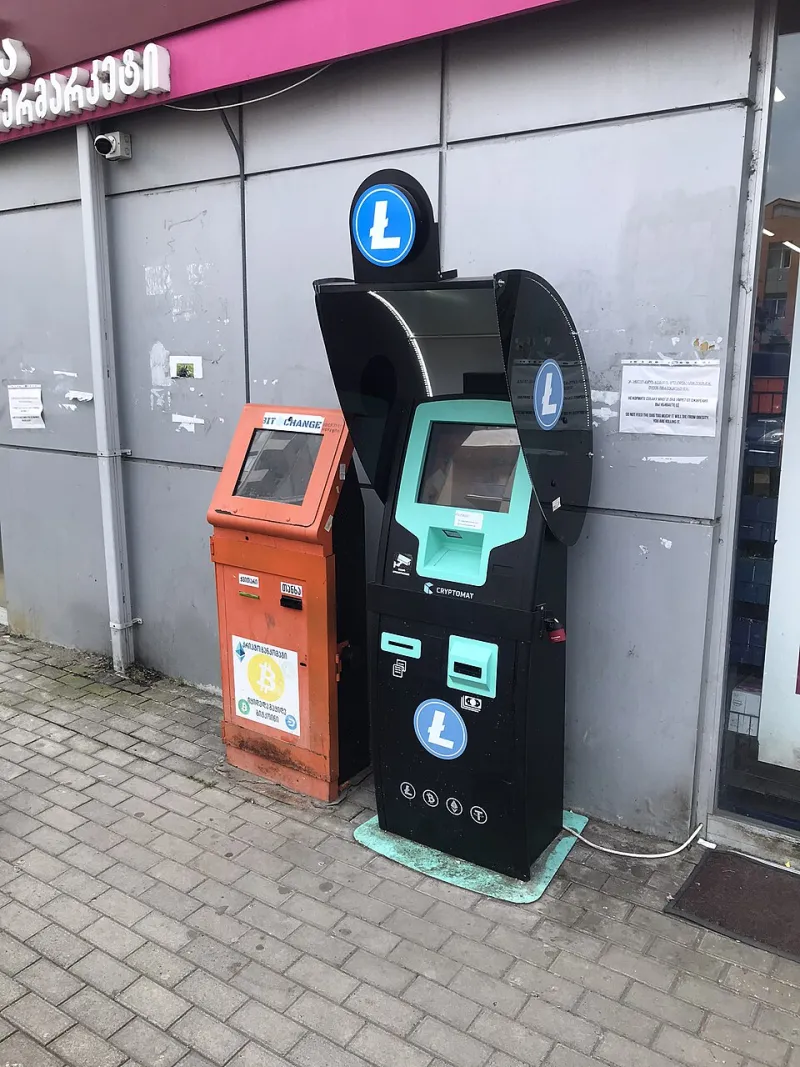
Photo: Vitaly Zdanevich, CC BY 4.0, via Wikimedia Commons
America has made a habit of placing financial convenience where people already are. Crypto kiosks — often called Bitcoin ATMs, though many now sell several digital assets — sit in convenience stores, laundromats, and strip malls from coast to coast. The pitch is simple: insert cash, scan a wallet address, and walk out with digital assets in minutes. For a first-time buyer, that speed can feel like progress. For a consumer advocate, it looks like a premium product with an unusually opaque price tag.
The sticker price is not the price
A kiosk transaction usually involves at least three costs. The operator may charge a service fee, often expressed as a percentage of the purchase. The machine may apply a spread between the cash price and the market price of the asset. And the wallet or exchange receiving the asset may add its own network or processing charge. The combined cost can be far higher than the fee shown on the screen at the start. Some operators disclose the spread only near the end of the transaction, after the customer has already committed time and cash.
That structure matters because kiosk customers are often buying small amounts. A 15 percent combined cost on a 200 dollar purchase is 30 dollars before the asset has moved at all. The buyer needs a substantial price increase just to break even. By contrast, a regulated exchange or a peer-to-peer model may charge a visible fee and a narrower spread, though each carries its own risks and verification requirements.
Why scammers prefer the kiosk
Crypto kiosks are popular with fraudsters for reasons that have little to do with the technology. The transactions are fast, irreversible, and often occur in physical locations that feel official. A scammer can instruct a victim to withdraw cash, find a kiosk, and scan a wallet address while staying on the phone. The victim may be told the machine is a government payment terminal, a tech support refund point, or a safe way to protect savings. By the time a store clerk or family member intervenes, the digital assets may already be moving.
US authorities have repeatedly warned about this pattern. The FBI's Internet Crime Complaint Center has documented kiosk-related fraud in romance scams, government impersonation, and technical support schemes. State attorneys general and financial regulators have also pressed operators for clearer warnings and lower transaction limits. The common thread is not that the kiosk is uniquely dangerous in its code. It is that the kiosk combines urgency, cash, and an irreversible transfer in one place.
What regulators and courts are watching
Crypto kiosks sit at the intersection of money transmission rules, consumer protection law, and anti-fraud enforcement. Operators generally must register with the Financial Crimes Enforcement Network and comply with state money transmission requirements, though the details vary. Some states have proposed caps on fees or mandatory hold periods for new customers. Others have focused on refund rights and disclosure. The direction is clear: policymakers are treating the kiosk channel as a consumer front door that needs guardrails.
For users, the practical lesson is that a kiosk receipt is not a warranty. Once a transaction is confirmed on a public blockchain, reversing it usually requires the recipient's cooperation. That is a feature of decentralized settlement, but it is a poor fit for a consumer who was misled about the recipient.
A practical checklist before you touch a kiosk
- Compare the all-in price with at least two other on-ramps. Ask for the service fee, the spread, and the network charge in dollars, not percentages alone.
- Check the operator's state license and complaint history. A legitimate operator should display registration information and a support number.
- Never buy under pressure. No government agency, tech support desk, or romantic partner should require a kiosk payment.
- Start with a small test transaction if you must use a kiosk. Confirm the asset arrives in a wallet you control before sending more.
- Avoid scanning a wallet address supplied by someone else during a phone call. Use a saved address or a QR code you generated yourself.
- Keep receipts and screenshots. If something goes wrong, documentation improves the odds of a complaint or chargeback discussion, though it does not guarantee recovery.
The cheaper alternatives, and their trade-offs
A regulated exchange is not free of risk. It requires identity verification, holds customer assets in custody unless withdrawn, and may restrict withdrawals during periods of high demand. A peer-to-peer marketplace can offer better prices but exposes buyers to payment fraud and counterparty risk. A self-custody wallet avoids custodial risk but puts the entire burden of key management on the user. The right choice depends on the buyer's experience, the size of the purchase, and the urgency of the need.
For SucreCoin, the kiosk story is a reminder that adoption cannot be built on an expensive, opaque front door. A digital currency intended for everyday use needs on-ramps that are transparent about cost, clear about custody, and designed for people who are not cryptocurrency experts. Convenience is valuable. But when the convenience premium is hidden, it becomes a tax on the least experienced users.
The safest rule is simple: if a kiosk cannot explain its total cost in plain language before you insert cash, walk away. The asset may be digital, but the risk is coming out of your pocket.