From Forgotten Currency to Digital Standard: What the Sucre's History Reveals About Monetary Independence
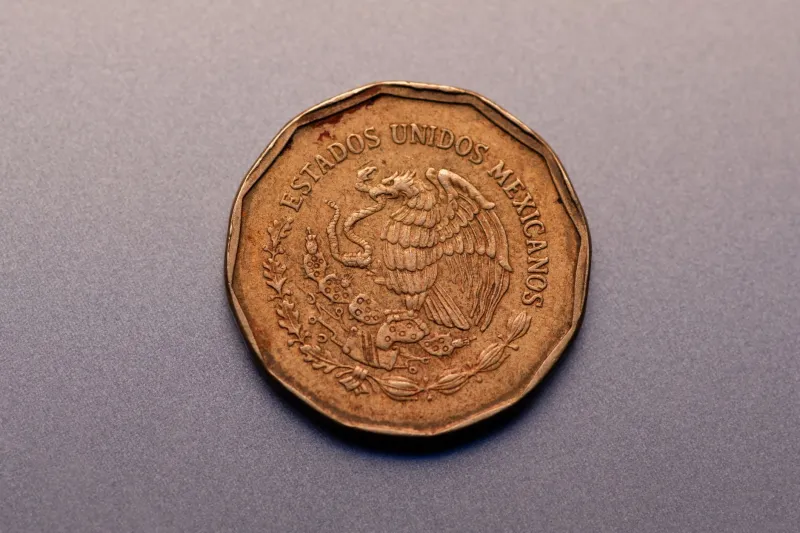
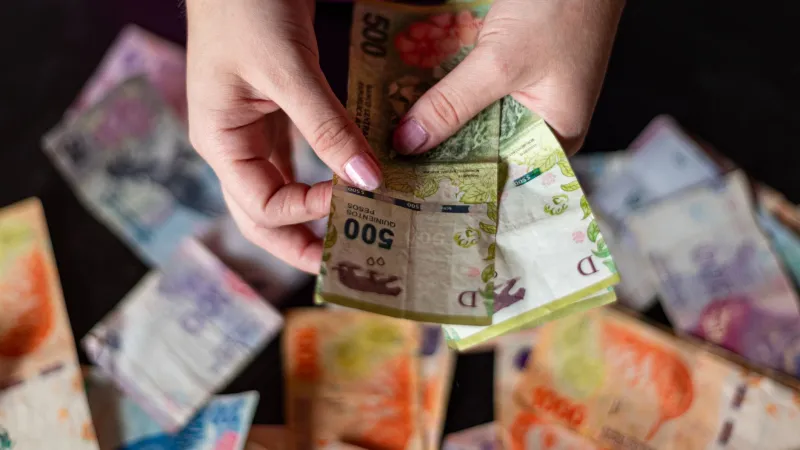
In January 2000, Ecuador made a decision that stunned economists and quietly reshaped how the world thought about monetary sovereignty. Facing catastrophic inflation, a collapsed banking sector, and a currency that had lost roughly two-thirds of its value in a single year, the Ecuadorian government announced it would abandon the sucre—its national currency since 1884—and adopt the US dollar as its official legal tender. The sucre, named after Venezuelan independence hero Antonio José de Sucre, ceased to exist as a functioning monetary instrument almost overnight.
For most Americans, this event registered as a distant footnote in Latin American economic history. But for anyone paying close attention to the accelerating conversation around digital asset diversification in 2025, the sucre's story is anything but irrelevant. It is, in fact, one of the most instructive monetary parables of the modern era—and it is no accident that SucreCoin chose this name as the foundation of its identity.
A Century of Monetary Identity, Erased in Months
The sucre's trajectory from respected regional currency to casualty of dollarization unfolded over decades of accumulating structural pressure. Ecuador's economy, heavily reliant on oil exports and vulnerable to commodity price swings, was poorly insulated against external shocks. When the Asian financial crisis rippled outward in the late 1990s and oil prices collapsed simultaneously, the sucre entered a death spiral. The central bank printed money to cover government deficits. Inflation soared past 60 percent annually. Citizens who had saved in sucres watched their purchasing power dissolve.
The decision to dollarize was presented as a stabilization measure—a way to import monetary credibility by tethering Ecuador's economy to the world's reserve currency. In the short term, it worked. Inflation fell. The banking system stabilized. But the trade-off was profound: Ecuador surrendered the ability to set its own interest rates, respond to domestic economic conditions with monetary tools, or issue currency that reflected its own fiscal realities. The country became, in monetary terms, a passenger rather than a driver.
This is the lesson encoded in SucreCoin's name. Not a celebration of the sucre's failure, but a recognition of what was lost when a nation's monetary sovereignty was subordinated to a single external currency—however powerful that currency might be.
Why American Investors Are Starting to Ask the Same Questions
It would be tempting to view Ecuador's dollarization as a uniquely Latin American problem, a consequence of institutional fragility and political instability that simply does not apply to the United States. That assumption deserves scrutiny.
American households and investors operate within a system that, while far more stable than Ecuador's was in 1999, still concentrates monetary risk in a single instrument. The US dollar is simultaneously the world's reserve currency and the primary store of value for most American savers. When inflation accelerated sharply in 2021 and 2022, reaching levels not seen since the early 1980s, that concentration became painfully visible. Savings accounts, money market funds, and fixed-income instruments denominated in dollars lost real purchasing power at a rate that surprised even experienced investors.
The parallel is not that America is on the verge of dollarization in reverse. The parallel is subtler and more important: single-currency dependency, regardless of which currency it involves, creates systemic exposure that diversification can mitigate. Ecuador had no meaningful alternative when the sucre collapsed. American investors, in 2025, increasingly do.
The Name as a Philosophy
SucreCoin's invocation of the sucre is a deliberate philosophical statement. The project is not nostalgic for a failed currency. Rather, it draws on the sucre's history to articulate why monetary alternatives matter—and why a purpose-built digital asset designed with stability, transparency, and structural integrity can serve as something the original sucre never had the architecture to become: a genuinely resilient store of value.
Antonio José de Sucre, the liberator whose name the currency bore, dedicated his life to the idea that South American nations deserved self-determination—political, territorial, and by extension economic. The irony that his namesake currency became a symbol of monetary dependency is not lost on the historians who have examined Ecuador's dollarization. SucreCoin reclaims that name as an assertion of monetary agency rather than its absence.
For US investors, this framing offers a useful lens. Digital asset diversification is not, at its core, a speculative bet on technology. It is a structural decision about how much monetary risk an investor is willing to concentrate in any single system. The sucre's story illustrates what concentrated monetary dependency looks like when it fails. SucreCoin's architecture is designed around the proposition that the tools now exist to build something more durable.
What the Sucre's Collapse Actually Teaches About Crypto Adoption
Students of monetary history will note that Ecuador's dollarization did not emerge from ideological preference. It emerged from necessity—from the absence of a credible alternative at a moment of acute crisis. Citizens and businesses did not choose the dollar because it was philosophically superior to the sucre. They chose it because it was the only instrument available that retained functional value.
This dynamic recurs across modern crypto adoption patterns, though the context differs substantially. Many of the most enthusiastic early adopters of digital currencies were not ideological libertarians or technology enthusiasts. They were individuals operating in environments where existing monetary systems had failed them—through hyperinflation, capital controls, banking exclusion, or confiscatory policy. The adoption was pragmatic before it was principled.
What makes the current moment in the United States distinctive is that the pragmatic case for digital asset diversification is strengthening even in the absence of acute crisis. American investors are not fleeing a collapsing currency. They are making proactive structural decisions about portfolio resilience in an environment of persistent inflation, rising sovereign debt, and growing uncertainty about the long-term purchasing power of dollar-denominated savings. The sucre's history suggests that waiting for crisis to force the decision is a strategy with well-documented costs.
Sovereignty, Stability, and the Architecture of Alternatives
The most enduring lesson of the sucre's monetary journey may be this: the value of an alternative is determined not at the moment of calm but at the moment of stress. Ecuador had no viable monetary alternative when the sucre collapsed, and so it accepted dependency as the price of stability. The question SucreCoin poses to American investors is whether building exposure to a purpose-designed digital asset during a period of relative stability is more prudent than discovering the need for an alternative after options have narrowed.
This is not a counsel of panic. The US dollar remains the world's dominant reserve currency, and American financial institutions remain among the most sophisticated in the world. But monetary history—and the sucre's story is only one chapter of a very long book—consistently rewards those who think structurally about diversification before they are compelled to act reactively.
SucreCoin carries its name as both a tribute and a warning. A tribute to the idea of monetary self-determination that the original sucre was meant to embody. And a warning, drawn from the historical record, about what happens when that self-determination is left without a credible architectural foundation. For American investors paying attention, the metaphor is as relevant today as the history that inspired it.