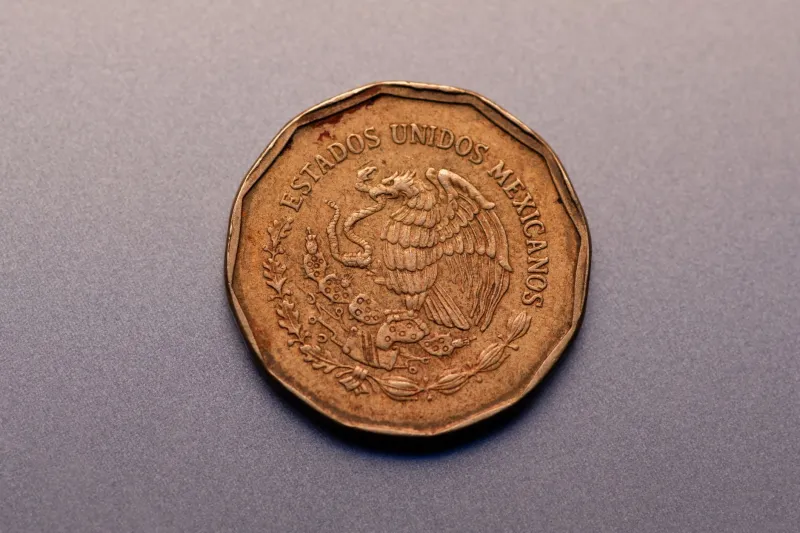
Engineered From the Ashes: How the Sucre's Documented Failures Were Reverse-Engineered Into SucreCoin's Core Architecture

Most digital currencies borrow their names from history as a branding exercise — a nod to heritage without any serious engagement with what that heritage actually means. SucreCoin takes a different approach. The original Sucre, Ecuador's national currency for over a century, did not fade quietly into irrelevance. It collapsed under the weight of specific, identifiable structural failures. And those failures, examined carefully, read less like cautionary footnotes and more like a technical specification for what a resilient monetary system must never permit.
For American investors accustomed to evaluating digital assets on the basis of market cap, trading volume, or celebrity endorsements, this kind of forensic monetary history may seem academic. It is anything but. The design decisions embedded in SucreCoin's architecture trace directly back to the documented weaknesses that destroyed its historical predecessor — and understanding that lineage offers a uniquely clear window into why this project is built the way it is.
What Actually Killed the Sucre
The Sucre's collapse in 2000 is often reduced to a single headline: Ecuador dollarized its economy after a catastrophic currency crisis. But the mechanics underneath that headline are far more instructive than the outcome itself.
The Sucre's deterioration unfolded across three compounding failure axes. First, supply discipline disintegrated. Successive Ecuadorian governments, facing fiscal shortfalls, authorized monetary expansion that consistently outpaced any credible economic justification. The resulting inflation eroded purchasing power so aggressively that ordinary citizens lost confidence in the currency as a store of value long before the formal crisis arrived. By the late 1990s, the Sucre had lost roughly 75 percent of its value against the dollar in a matter of months.
Second, governance was centralized to the point of fragility. Monetary policy decisions rested with institutions that were structurally susceptible to political pressure. There was no mechanism — technical, legal, or procedural — that could insulate supply controls from the short-term incentives of elected officials. When those incentives pointed toward expansion, expansion followed, regardless of macroeconomic consequence.
Third, settlement infrastructure was slow and opaque. Cross-border transactions involving the Sucre were routed through correspondent banking arrangements that introduced delays, layered fees, and informational asymmetries that disadvantaged ordinary users relative to institutional actors. The currency worked reasonably well for those with access to sophisticated financial intermediaries. For everyone else, it worked poorly — and in a crisis, it stopped working entirely.
The Blueprint Principle: Failure Points as Design Constraints
SucreCoin's architecture treats each of those three failure axes as a hard design constraint rather than a soft preference. This is not a metaphorical claim. It is reflected in specific technical and governance choices that distinguish the protocol from both its historical namesake and from the broader landscape of digital assets.
On supply discipline, SucreCoin implements a deterministic issuance model governed by the protocol itself rather than by any administrative body. The total supply trajectory is encoded at the consensus layer, meaning that no single actor — and no coalition of actors below a defined threshold — can authorize inflationary expansion. This is the precise inversion of the Sucre's vulnerability: instead of supply policy being as flexible as political will, it is as rigid as cryptographic consensus.
For American investors familiar with the Federal Reserve's discretionary mandate, this distinction carries real weight. The dollar's supply is managed by an institution staffed with credentialed economists and insulated from direct political control — yet it still operates on a discretionary basis, responding to conditions as they evolve. SucreCoin's supply model removes that discretion entirely. Whether one views that as a feature or a limitation depends on one's monetary philosophy, but the historical context makes the reasoning unmistakable.
Decentralized Governance as Structural Insurance
The second failure axis — concentrated governance — is addressed through SucreCoin's consensus mechanism, which distributes validation authority across a geographically and institutionally diverse network of participants. No single node, jurisdiction, or organizational entity controls the protocol's evolution.
This matters for a reason that goes beyond abstract decentralization ideology. The Sucre's governance failure was not a story of bad actors making obviously wrong decisions. It was a story of rational actors responding to short-term incentives in ways that were individually defensible but collectively destructive. Decentralized consensus doesn't assume that participants are altruistic — it assumes they are self-interested, and structures the incentive landscape so that self-interest aligns with protocol integrity.
For US-based investors evaluating governance risk in digital assets, this framing offers a useful analytical lens. The question is not whether a project's leadership team has good intentions. The question is whether the protocol's architecture would survive a leadership team with bad intentions — or simply with different priorities. SucreCoin's answer to that question is embedded in its consensus design, not in its marketing materials.
Settlement Speed as a Sovereignty Issue
The third failure axis — slow, opaque settlement infrastructure — is perhaps the most practically relevant for American users engaging in cross-border transactions, particularly those with commercial or family ties to Latin America.
The original Sucre's settlement limitations were partly a function of technology and partly a function of institutional architecture. Correspondent banking relationships introduced intermediaries who extracted value at every handoff. Information about transaction status was proprietary to those intermediaries rather than publicly verifiable. And the system's overall latency meant that parties on opposite ends of a transaction were exposed to exchange-rate risk for extended periods — a meaningful vulnerability when the underlying currency was already volatile.
SucreCoin's settlement layer was designed to eliminate each of these friction points. Transactions finalize on a timeline measured in seconds rather than days. The ledger is publicly auditable, meaning that transaction status is verifiable by any party without privileged access to institutional systems. And because the protocol operates without mandatory intermediaries, the fee structure reflects actual computational costs rather than the rent-seeking behavior that correspondent banking enables.
For a US small business owner managing payments to suppliers in Ecuador or Colombia, or for a family sending remittances across the hemisphere, these are not abstract architectural virtues. They are practical differences that compound across every transaction.
Reading History as a Technical Document
There is a particular kind of intellectual discipline required to look at a monetary failure — especially one as dramatic as the Sucre's collapse — and extract from it a set of precise, actionable design principles rather than a general lesson about the dangers of mismanagement. That discipline is visible throughout SucreCoin's architecture.
The project's name is not nostalgic. It is diagnostic. The Sucre failed in documented ways, and those documented ways became the engineering brief for a system designed to survive where its predecessor could not. For American investors evaluating digital assets in a landscape crowded with projects that offer innovation without historical grounding, that kind of deliberate, evidence-based design philosophy represents something genuinely scarce.
The Sucre's collapse was, in retrospect, a monetary experiment that generated enormously valuable data about what currencies require to survive. SucreCoin is the hypothesis that emerged from analyzing that data carefully — and building accordingly.